

Developed by the UNESCWA disability rights team, this dashboard maps available assistive devices and technologies designed to foster independent living and inclusive employment for persons with disabilities. We extend our gratitude to our core partners, AGFUND and AccessLife (Egypt), whose collaboration makes this project possible
 

Explore the types of broad groupings used to classify different types of impairments that affect how people function in daily life. The main categories include Sensory, Psychological, Intellectual, and Mobility disabilities, each with specific examples.

By the numbers

Four Categories of Disability

Sensory

Sight, hearing, or sensory impairments

1.5B+

people experience hearing loss globally

Psychological

Mental health & emotional conditions

970M+

people live with mental disorders worldwide

Intellectual

Learning, reasoning, & adaptive limitations

200M+

people have intellectual disabilities globally
Mobility

Movement, balance, & motor impairments

1 in 6

people globally live with significant disabilities

Learn More

What Each Category Means

Expand each category below to read its full definition and understand the spectrum of experiences within it.

Sensory Disability
 
Visual Disabilities

Blindness — The complete or near-complete absence of functional vision. A person is considered blind when visual acuity falls below 20/200 in the better eye even with correction, or when their field of vision is severely restricted.
 

Low Vision — A significant visual impairment that cannot be fully corrected with glasses, contact lenses, or surgery. People with low vision retain some usable sight but may struggle with tasks like reading, recognizing faces, or navigating environments.
 

Color Blindness — A condition in which a person has difficulty distinguishing between certain colors, most commonly red and green, due to the absence or malfunction of specific color-sensitive cells (cones) in the retina. It is rarely a total inability to see color.
 

Visual Processing Disorders — A neurological condition in which the brain has difficulty interpreting and making sense of visual information, despite the eyes themselves functioning normally. It can affect a person's ability to read, judge distances, or recognize objects and shapes.

Auditory Disabilities

Deafness — The complete or profound loss of hearing in one or both ears, to the degree that a person cannot understand speech through the ear alone, with or without the use of hearing aids.
 

Hard of Hearing — A partial degree of hearing loss ranging from mild to severe. People who are hard of hearing may use hearing aids or other assistive devices and can typically communicate through spoken language, though with varying degrees of difficulty.
 

Auditory Processing Disorders (APD) — A condition in which the brain has difficulty processing and interpreting auditory information correctly, even though hearing sensitivity itself may be normal. It affects how sound, especially speech, is understood in complex or noisy environments.

Speech and Communication Disabilities

Speech Impairments — A broad category referring to difficulties in producing speech sounds correctly or fluently. This can include articulation disorders, where sounds are omitted, substituted, or distorted, making speech difficult for others to understand.
 

Stuttering — A speech fluency disorder characterized by involuntary repetitions, prolongations, or blockages of sounds, syllables, or words. It can be accompanied by physical tension or secondary behaviors such as blinking or facial movements.
 

Non-Verbal Communication Needs — Refers to the inability or significant difficulty in using spoken language to communicate. Individuals with this condition rely on alternative and augmentative communication (AAC) methods such as sign language, picture boards, or speech-generating devices.
 

Voice Disorders — Conditions that affect the quality, pitch, loudness, or resonance of a person's voice, caused by problems with the vocal cords or surrounding structures. Examples include chronic hoarseness, loss of voice, or abnormal voice pitch.

Psychological Disability
 
Anxiety Disorders

A group of conditions characterized by persistent, excessive fear or worry that is disproportionate to the actual situation. They include generalized anxiety disorder, panic disorder, social anxiety disorder, and phobias, all of which can interfere with daily functioning.

Mood Disorders

Conditions that cause significant and prolonged disturbances in a person's emotional state. The most common include major depressive disorder, characterized by persistent sadness and loss of interest, and bipolar disorder, which involves cycling between depressive and manic episodes.

Psychotic Disorders

Severe mental health conditions that cause a person to lose touch with reality, often involving hallucinations (perceiving things that are not there), delusions (strongly held false beliefs), or disorganized thinking. Schizophrenia is the most well-known psychotic disorder.

Trauma-Related Conditions

Mental health conditions that develop as a result of exposure to traumatic or deeply distressing events. Post-Traumatic Stress Disorder (PTSD) is a primary example, involving flashbacks, nightmares, hypervigilance, and emotional numbness following trauma.

Social Interaction Challenges

Difficulties in forming, maintaining, or navigating social relationships and interactions, often stemming from underlying mental health conditions. These challenges can manifest as social withdrawal, misreading social cues, or intense discomfort in interpersonal situations.

Intellectual Disability
 
Developmental Intellectual Disabilities

Intellectual limitations that originate during the developmental period (before age 18), resulting from genetic conditions (such as Down syndrome), prenatal factors, or early childhood events. They affect cognitive abilities, adaptive behavior, and overall development.

Learning Difficulties

Neurologically-based conditions that affect the ability to acquire, process, store, or respond to information. Unlike intellectual disabilities, learning difficulties typically affect specific areas such as reading (dyslexia), writing (dysgraphia), or mathematics (dyscalculia), while general intelligence may remain unaffected.

Memory Impairments

Difficulties in encoding, storing, or retrieving information, which can affect both short-term and long-term memory. These impairments can result from brain injuries, neurological conditions, or developmental factors and significantly impact learning and daily functioning.

Problem-Solving and Reasoning Limitations

Difficulties in applying logical thinking, abstract reasoning, or structured thought to analyze situations and arrive at solutions. These limitations can affect a person's ability to plan, make decisions, understand cause and effect, and manage complex tasks independently.

Mobility Disability
 
Limited Mobility

A broad term describing a reduced ability to move freely and independently. It may affect walking speed, range of motion, balance, or endurance, and can result from conditions like arthritis, chronic pain, obesity, or aging.

Partial Paralysis (Paresis)

A condition in which muscle function in part of the body is weakened or reduced but not entirely absent. It can affect one limb (monoparesis), one side of the body (hemiparesis), or the lower body (paraparesis), typically caused by neurological damage.

Full Paralysis (Plegia)

The complete loss of muscle function and sensation in one or more parts of the body. Types include hemiplegia (one side of the body), paraplegia (lower body), and quadriplegia/tetraplegia (all four limbs), most commonly caused by spinal cord injuries or stroke.

Amputation

The removal of a limb or part of a limb either through surgery (due to disease, injury, or medical necessity) or traumatic injury. Amputations affect mobility and function to varying degrees depending on the level and type of limb loss.

Muscular/Neuromuscular Conditions

A group of disorders that affect the muscles directly or the nerves that control them, leading to progressive muscle weakness, wasting, or loss of function. Examples include muscular dystrophy, multiple sclerosis, and amyotrophic lateral sclerosis (ALS).

Fine Motor Impairments

Difficulties with small, precise movements of the hands and fingers, such as gripping, writing, buttoning clothing, or using utensils. These impairments often result from neurological conditions, developmental disorders, or injuries affecting the hands or wrists.

Tremors

Involuntary, rhythmic muscle contractions causing shaking movements in one or more parts of the body, most commonly the hands. Tremors can be caused by neurological conditions such as Parkinson's disease, essential tremor, or multiple sclerosis, and can significantly interfere with daily tasks.

Limited Hand or Arm Use

Reduced or absent functional use of the hands or arms, affecting a person's ability to reach, grasp, lift, or manipulate objects. This can result from spinal cord injuries, stroke, nerve damage, or degenerative conditions, and often necessitates assistive devices or adaptive strategies.

Global Impact

Access to Assistive Technologies
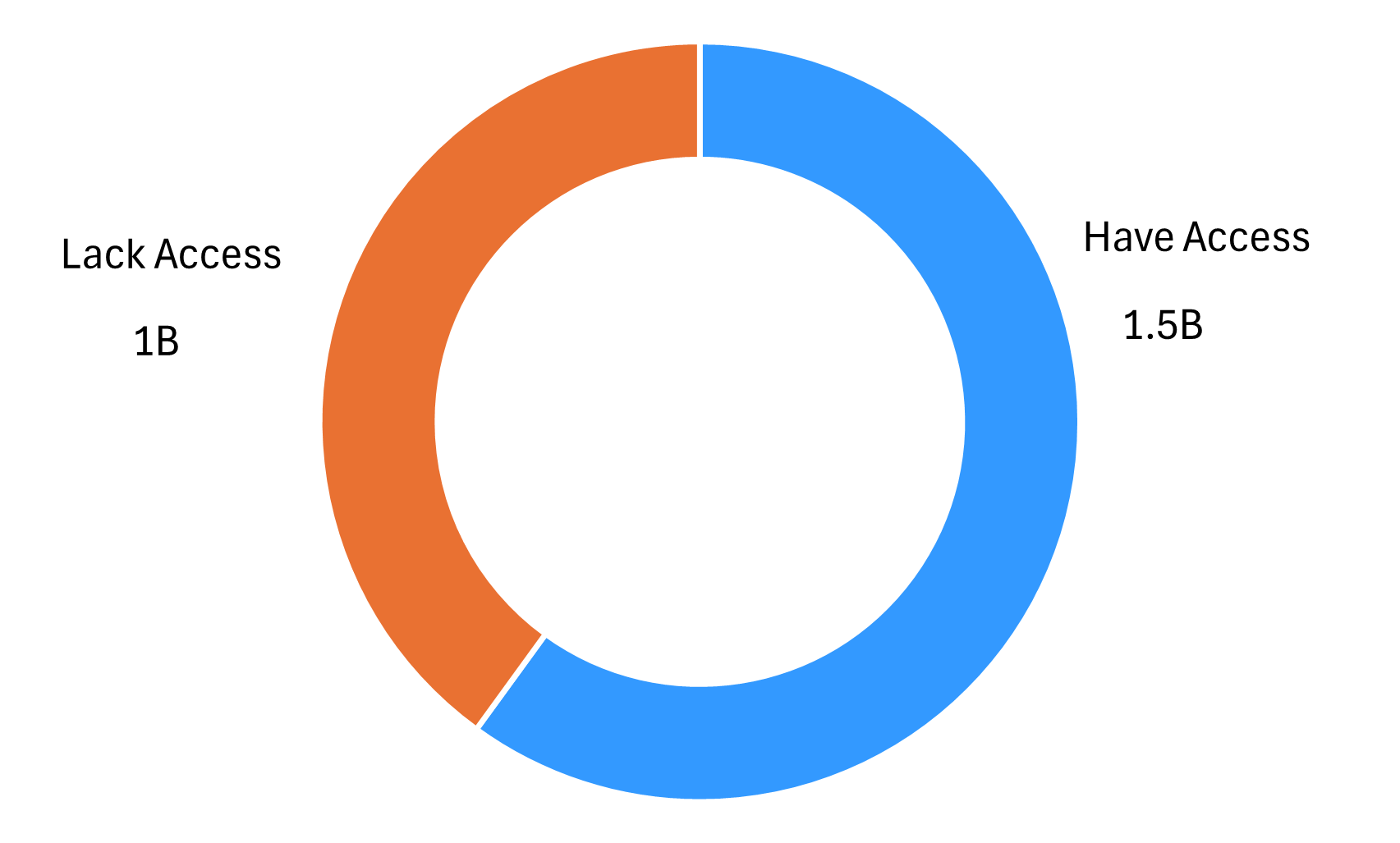
chart1

Global access to assistive technologies 

(WHO & Global Studies)


Key Facts

1.3 billion people — about 16% of the world's population — experience some form of significant disability.

Disability rates are rising due to aging populations and increases in chronic health conditions.

With the right assistive tools, most individuals can lead fully independent and meaningful lives.
How to use the table
 

Explore assistive devices

This table helps you discover devices designed for people with disabilities. Each row contains rich information — name, type, category, subcategory, a photo and a short description.

Language toggle

A checkbox at the top of the table lets you switch between English and Arabic at any time.

Filter step by step

Device Name

Search for a device you already know by name using this dropdown.

Device Type

Narrow results by the broad type of assistive technology.

Category

Filter by the need — mobility, sensory, intellectual, etc.

Subcategory

Use the last dropdown to dive deeper into a specific sub-group.